
Sunday, May 9, 2010

Backup Plan doesn't deliver

Font Size:
Default font size
Larger font size

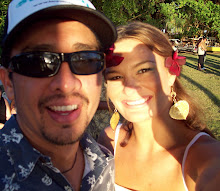
Amanda C. Gregg/Contributed photoCharlie Andrade and Betty Brun, smiling apres-film.

  • KT_Movies.jpg
  • KT_Movie2.jpg

http://thegardenisland.com/entertainment/night-life/article_a73b7948-55ac-11df-a242-001cc4c03286.html

A muddled start, awkward middle and contrived, feel-good (albeit prolonged) ending made for a disappointing matinee in “The Back-Up Plan.”

Off-putting from its onset, we see Zoe (Jennifer Lopez) amidst artificial insemination and spending a subsequent five minutes mentally recalling the chain of events that brought her to the clinic table.

It’s five minutes we don’t really need, at this point the formulaic quality has already been laid out and what could be a decent chick flick kicks off its first series of disappointing turns.

A woman with a ticking biological clock is impatient and takes matters into her own hands. She is then surprised to find “Mr. Right” with wrong timing.

The next 20 minutes are spent in the romance-courtship section where the right man, Stan (Alex O’Loughlin), unexpectedly shows up. For the purposes of this movie, the happenstance meeting occurs as they hail the same cab in the rain and argue over who got there first.

And again we know that they will begin as adversaries but end up romantically involved, in this case through Stan’s near-stalker persistence.

While we don’t expect “The Back-Up Plan” to break new ground (even with the added wrinkle of Zoe being pregnant) we should at least expect Stan to be more charming than frightening in his determination to court her. We also can hope for the lighthearted moments that ensued in which he spills wine and the two hose each other down to be more charming than awkward.

Of course, eventually Lopez must admit to Stan that she’s pregnant and Stan must decide whether he wants to stay with her and accept the responsibility of a pregnancy and children. This is at least the point where the movie improves: it finds the resonance most probably expected when heading to the cinema in the first place.

In its depictions of the trials of pregnancy, the movie takes an honest, humorous portrayal of one of the world’s most humbling experiences.

Whether it’s the comfort she’s found in her pregnancy pillow, the fast food lingering in her hair, her longing for the “cute butt” she used to have or the financial worries that come with children, these parents-to-be scenarios almost redeem the pitfalls of the movie’s awkward start.

Each fear proves to be a test in Stan and Zoe’s relationship and each makes them stronger until a final test in which Zoe must learn to overcome a crippling flaw: fear of abandonment.

While the comedy lacks surprises, it executes much of its comedy decently, particularly in a water-birthing scene with over-the-top earth mothers from Zoe’s single-mother-support group.

The glaring weakness, however, is the development of the relationship between Stan and Zoe, which could have started out as charming but instead turns into unrealistic and creepy. Unfortunately, what could have been a series of redeeming moments found in the shared strength needed during pregnancy doesn’t deliver.

Saturday, May 1, 2010

The Palmeiras: a true Hawai'i duo

Font Size:
Default font size
Larger font size

Amanda C. Gregg/Contributed photoMusicians Polei and Wally Palmeira play some old-school-style Hawaiian music at the Hukilau Lanai, in Waipouli.

  • kt music 1720.jpg
  • kt music 1734.jpg

Wanna go

To see the Palmeiras play, check out Hukilau Lanai Saturdays at 6 p.m.

http://thegardenisland.com/entertainment/night-life/article_5931fac0-55ab-11df-9ffc-001cc4c03286.html

They’re the best kind of local old-timers. The kind that alludes to a gentler, more authentic age, an age where the Duke Kahanamoku rode to the shore and the Waikiki beach boys serenaded visitors at the Moana Surfrider.

Inspired by the Waikiki-style singers of those days, like O’ahu-classic Johnny Alameda, Wally and Polei Palmeira are reminiscence in action.

The couple, a duo both in musical performances and life, has been married since September, 1955. Embodying elegance with a ’50s Hawai’i lounge-quality, the Palmeiras are sure to conjure up nostalgia and a deep appreciation for what many of us thought was lost.

Wally, on guitar, and Polei, on xylophone, are more than just your standard Hawaiian music duo, and they’ve put in their time.

They met in Long Beach, Calif., in the ‘50s while both working at a hula show—Wally as a musician, and Polei as a dancer.

As the show’s crew became smaller, Wally adapted the lineup to include the dancers playing music as well.

The couple played for 15 years at the Kaua‘i Sheraton before Hurricane ‘Iwa ran them out, Polei said.

Since then, they’ve made the rounds at the Westin and the Hanalei Bay Resort, with a circuit that now mostly includes Eastside’s Hukilau Lanai and Trees, Wally said.

Talking story with Wally is a lot like listening to his and his wife’s music: it hearkens to a simpler time. Wally has plenty of stories of the way Kaua‘i used to be, including remembering his days growing up in Wailua and Kapa’a and walking four miles to the $.09 movies at the old Pono Theatre. It was on that trek that he once hitched a ride home in Spaniard’s Model A Ford. (A Model T driver would often pass him on that walk but wouldn’t stop, he said.)

Though that story in itself remembers old Kaua’i, for the Palmeiras, nostalgia runs deeper than anecdotes. The couple incorporates that element into a discipline and taste, exemplified best perhaps by the outfits Polei coordinates for every show – that and their dedication to playing Hawaiian music above all else.

“When people come here they want to hear Hawaiian,” Wally said, adding they do keep Mainland mainstays such as Elvis and Sinatra in their repertoire to please visitors. That said, the couple also works to make the audience remember a piece of Hawai’i.

“A young lady asked if we could play Princess Pupule,” Wally said. “Her mother brought her to the islands and she remembered hearing it as a child. No one on the other islands could play it. But we could,” he added. “She cried when we did.”

Monday, April 26, 2010

Laughter and talent: the Ben Ahn mix

Amanda C. Gregg - Special to the garden island | Posted: Saturday, April 24, 2010 11:30 pm

http://thegardenisland.com/entertainment/night-life/article_a646e5e8-502c-11df-9d13-001cc4c002e0.html

When Ben Ahn was 13, he decided to follow in his father’s footsteps.

“I was in intermediate school when I became interested in the ‘ukulele. My father was a musician,” the born-and-raised Kaua‘i local said.

Though he lacked a specific “ah-ha” moment calling him to the ‘uke, Ahn said he was inspired by all the well-know

n guitar and ‘ukulele greats —Barry Flanagan, Peter Moon and Jake Shimabukuro, to name a few.

“Musically I look up to them, of course,” Ahn said. “They’re just incredible.”

Ahn, a Chiefess Kamakahelei Middle School ‘ukulele teacher for sixth-, seventh- and eighth-graders, recently returned to Kaua’i from Japan, after having taught abroad. And he’s been making a name for himself in the local bar scene ever since.

Ahn got his performing start after moving to Oregon for school, he said. “In 1999 I was part of a little band ‘til I graduated. After Japan I moved back to Kaua‘i and got active here with music again.”

Part-jokester, part-‘ukulele performer, on stage, Ahn plucks a mean series of strings but doesn’t take himself too seriously. He actively engages the audience, whether humorously or to gauge what type of music in which they’re interested. “It’s kind of like just hanging out with songs in between the talking,” he said. “That’s the vibe of my show. It makes it fun.”

Part of the fun, too, is ribbing audience members, something he does gently and with witty quips.

“You’re from Australia and my sister, living in New York, is dating a guy from Australia,” Ahn jokes in a set. “That makes us friends.”

Ahn also can put humor into a song that wouldn’t otherwise be there, such as the dramatic theme to “Braveheart,” demonstrating not only that such music can in fact be played by an ‘ukulele but that such thematic material remains moving yet humorous when paired with an obviously faux brogue.

Establishing a humorous rapport with the audience has also let him get away with jokingly humming along requests after announcing that he doesn’t know the lyrics.

However, despite the lyrics he doesn’t know, Ahn does have a broad repertoire of songs in his cue — everything from the oft-played Jawaiian number “Drop Baby” to the Hawaiian favorite “Hene Hene Ko Aka,” and the island music standards of Bruddah Iz —even an amped-up ‘ukulele version of the one-hit rap wonder, “Jump” by Kriss Kross.

Ahn enjoys playing covers, he said, but also writes his own music on his own time.

“My creative outlet is writing,” he said.

Though he doesn’t have any formally-produced recordings, Ahn does do “home recordings for fun,” he said. But he doesn’t have any recordings for sale.

His legacy for now is the lessons he teaches his ‘ukulele students.

“What I try and teach them is that the ‘ukulele is different from other subjects,” he said.

“First, it’s conceptual — you have to understand the music. After the brain learns that element, you still need to teach your fingers, so it’s also kinesthetic.”

The point Ahn tries to drive home?

“It’s impossible for me to teach you how to play. It’s 100 percent up to you to train your fingers how to do it. It’s repetition and practice,” he said.

“No. 1, you have to expect to succeed, and No. 2, you have to be willing to work hard.

“It’s something you enjoy and have to be willing to work at and have fun doing.”

A lesson Ahn surely practices as well as teaches.

To learn more or for a booking, e-mail: benahn7@hotmail.com.

Saturday, April 24, 2010

'The Last Song': a bittersweet progression


Amanda C. Gregg - Special to The Garden Island | Posted: Saturday, April 24, 2010

http://thegardenisland.com/entertainment/night-life/article_1c83471e-502e-11df-8cdb-001cc4c002e0.html

At times poignantly sweet, as all tearjerkers are, Disney’s “The Last Song” attempts to pull at your heartstrings, at times successfully.

Though perhaps formulaic for a Nicolas Sparkes (“A Walk to Rem

ember,” “The Notebook”) screenplay — unexpected young love takes a complicated turn — there are a few surprises that balance the plot line poetically.

A musical prodigy of sorts, Ronnie Miller (teen sensation Miley Cyrus) and her younger b

rother Jonah (Bobby Coleman) set off to spend the summer with their estranged father Steve (Greg Kinnear) in the small, Georgia town of Tybee Island. While lovely in scenery, the rural town appears to also boast some Coney Island-esque qualities, from ferris wheel to seedy underbelly. It is here that Miller gets in with a rough crowd from the wrong side of the tracks before learning a few contrived life lessons.

Intent on not forgiving her father for her parent’s divorce, Miller is initially presented as another misunderstood teen in touch with her angst-ridden self before boyfriend-to-be Will Blakelee (Liam Hemsworth) courts her with persistence, Tolstoy quotes and the overwhelming sense that he “gets” her — Blakelee not only sees through her dark façade but proves to her she’s worth the work. And as the summer progresses, Blakelee proves he is a better man than Miller originally thought with each misstep he makes.

Miller’s musical talent and tutelage in music come from her father, a talent she forsakes until she can forgive him — and that forgiveness comes with the beginning of her love for Blakelee. With the onset of that love, Miller is able to rekindle her affair with the piano, and finally plays again.

Until this point the plot could seem rote, however, part of what ingratiates this movie to its audience isn’t what relies on Miller’s relationship with her new beau, but rather the relationship that she builds with her father.

To be sure, the relationship between Miller and Steve sets the stage for some of the more poignant scenes in the film.

One such scene takes place when Miller, her brother, boyfriend and father help hatching turtles make their treacherous and almost baptismal trek to the ocean in a moment epitomizing both nature’s cruelty and hope. The scene works as a metaphor about timing, strength and the fragility of life in regard to Miller and her father and younger brother — a theme that proves to be crucial to the film’s bittersweet ending.

It is with the father-daughter relationship that the movie departs from the played trials of young love and taps into the acting talents of both Kinnear and Cyrus. It is also the onset of an added dimension given to the younger brother who has been closest to his father and suffered quietly the loss of a daily relationship with him.

Kinnear provides the emotional underpinning that distinguishes this movie’s sweet moments from those that are simply saccharine.

All in all, though the movie is peppered with some heavily recycled ‘80s motifs (complete with a men’s beach volleyball scene hearkening back to the days of “Top Gun”), it is more unapologetically cute than cheesy — and a feel-good movie overall.

Thursday, February 18, 2010

And the 'iwi kupuna lose again

It was a strike against advocates for the rights of the 'iwi (burial grond) this week. The Planning Commission decided in favor of landowner and developer Joseph Brescia and the County of Kauai who supported the landowner’s petition to dismiss the motion filed by Native Hawaiian Legal Corporation to revoke Brescia’s building permits. The decision was based on the grounds (no pun intended) that without an approved burial treatment plan, he did not fulfill the conditions of his permits. The landowner argued that Mr. Brescia acted on validly issued permits, while the County argued that the court order which invalidated Brescia’s original burial plan also stated that he could continue to build. Harold Bronstein, attorney for interveners, The North Shore ‘Ohana, argued that the County was not bound by the court order as they were not party to the lawsuit.

The 4-2 decision for the landowner seemed to be a split decision between heart and mind. While no Commissioner seemed happy to allow construction to continue on a site with 33 known burials and a home placed on six of them, at least four were not willing to say that they were vested with the authority to stop construction. Perhaps they wish they were and simply couldn't say so on the record. While the need to honor the legal process while hoping justice plays out in court, it seems Native Hawaiian rights don't fit into the Mainland legal system, despite stations like the Burial Council and Office of Hawaiian Affairs.

While the Planning Commission has a responsibility to the County, perhaps that responsibility is too great and the legal process has put them in an unfortunate position. While it's obvious the Commission gives due consideration to these issues, it seems the framework of the law puts even those with a rigorous and passionate moral code unable to stop further desecration at Naue.

Emotion leads to the desire to point the finger. But is it really the Planning Commission, State Historic Preservation Division, the County? Who deserves the finger pointing? And how can one expect a developer to have respect for the bones of ancestors when he doesn't understand the meaning behind his host culture?

Can you force feed transplants to educate themselves on Hawaiian culture and tradition, and then further insist they care? Why would that start now? Lording new ideology is the new tradition in Hawai'i -- it was nearly two hundred years ago with the conversion of Hawaiians to Christianity, it continued with the overthrow of the kingdom, and then to the subdivision and sale of the land and finally to the permitting of the house. Each was a step that led to this, some overtly harmful, some done with the shining vision of God’s Kingdom, some done carefully weighing the liabilities of the County against a potentially deadly slash to the spirit.

The system leaves much anger but holds few accountable. Anger is righteous, and in the end does nothing when it comes to purposeful change. While Kaua'i may never gain the point at Naue back, it can make sure it never happens again. If ever there was a time for eminent domain, if ever the State owed Hawaiians eminent domain for those two hundred years, it is now.

The State Legislature must enable the Office of Hawaiian Affairs (OHA) and the State Historic Preservation Division to be able to, at a fair price to the owner, claim land such as Naue.

No one is here to blame but ourselves for postponing further an opportunity to set wrongs right.

News Archives

A life cut short — remembering ‘Sandy G’
Amanda C. Gregg – The Garden Island
Published: Saturday, May 16, 2009 2:08 AM HST
Editor’s note: Sandra Mendonca Galas was found murdered in ‘Ele‘ele on Jan. 26, 2006. Friday would have been her 31st birthday.

Tragic. Sobering. Egregiously unfair.
Few are the words that connote the tone necessary for what today means for the memory of Sandra Mendonca Galas. ...

click here for full story...

Feature writing | Travel pieces

Feature writing | Travel pieces

Journalism in the News